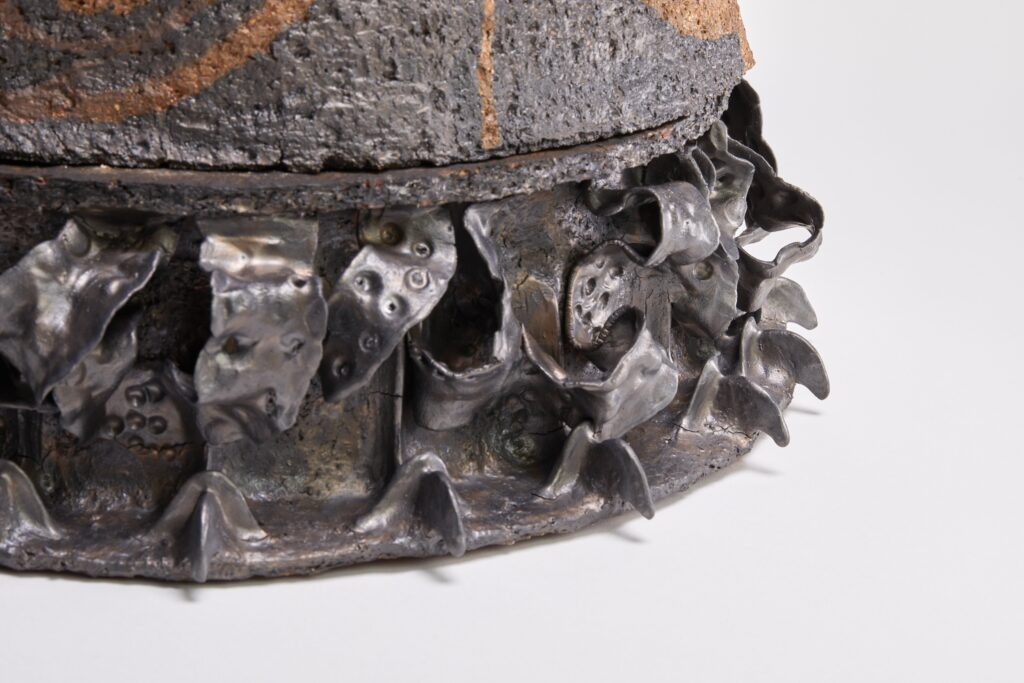
In this evolving series, Drapaniotou develops a visual language of hybrid forms that seem at once vertebrate and floral, tender and monstrous, sacred and alive. Spines become stems, petals resemble claws, vessels gather into bodies, and each sculpture appears as both offering and organism. Through these chimaeric presences, she continues to explore ceramics as a medium of becoming: a way of giving shape to unstable anatomies, imagined ecologies, and poetic states of metamorphosis.
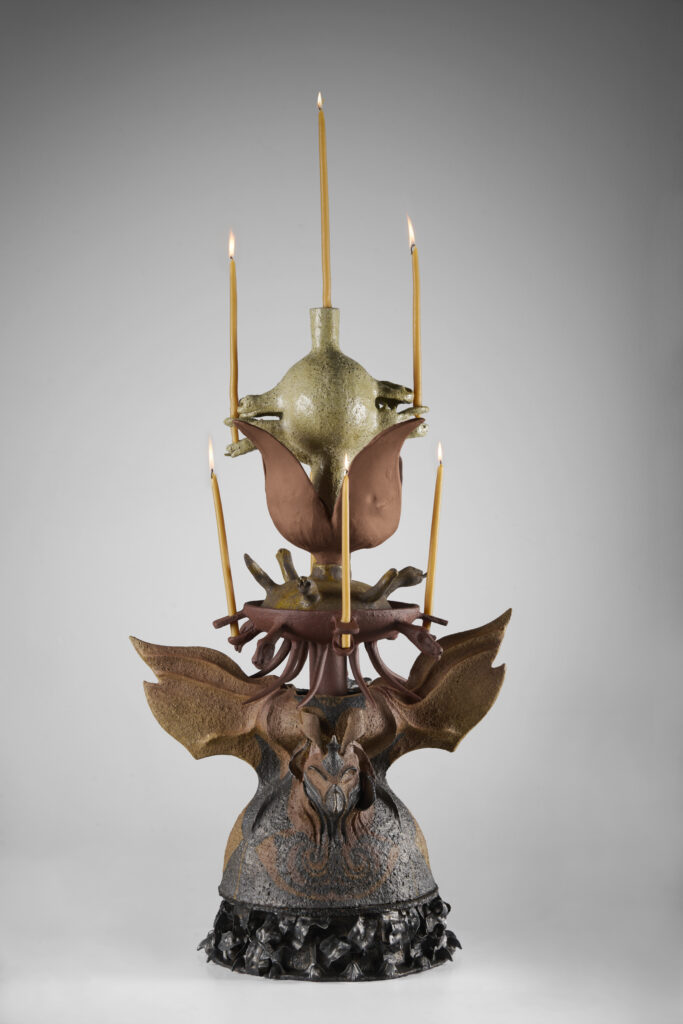
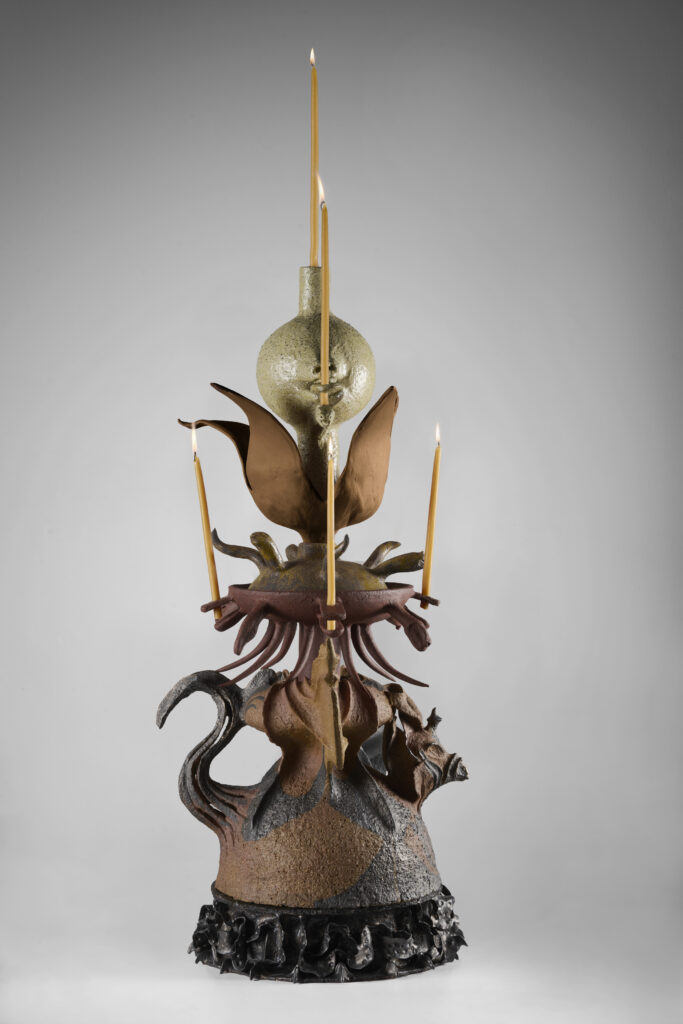
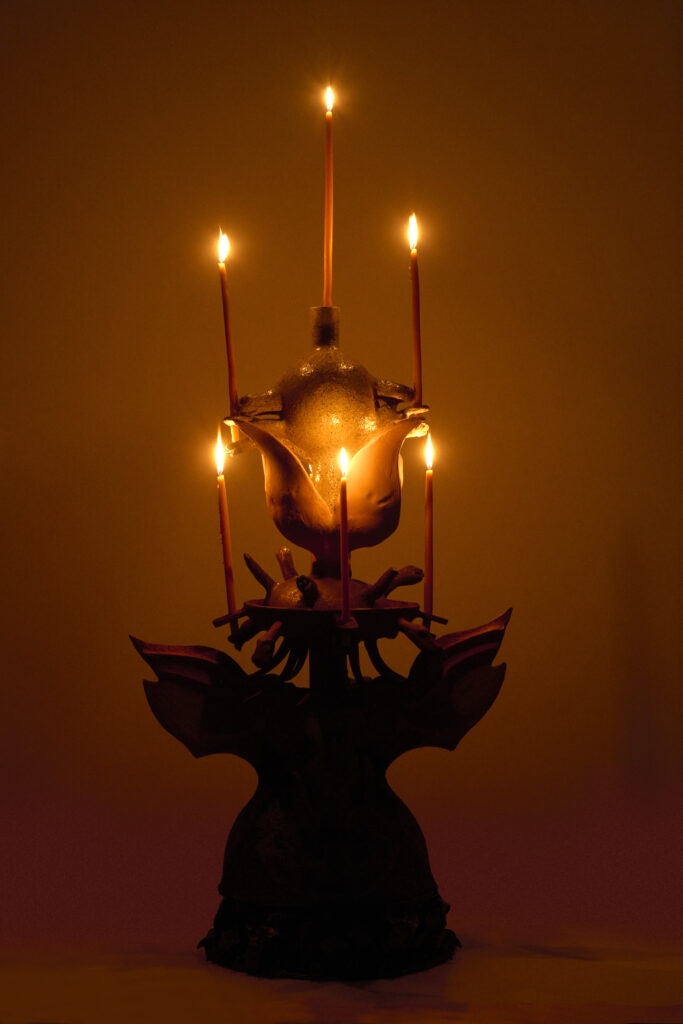
The chimera, in this context, becomes more than a mythical reference. It speaks to plurality, to bodies that resist fixed definition, and to identities composed through contradiction, instinct, and change. Drapaniotou’s female beasts do not appear as symbols of danger to be mastered, but as figures of power, sensuality, and inner knowledge. They hold something ancient and untamed, yet deeply generative: creatures suspended between vulnerability and force, between ornament and threat, between the fertile and the feral. In them, the monstrous is reclaimed not as aberration, but as a site of transformation, agency, and becoming.